Unpolished vs. Polished Dals: Why Shiny Isn’t Better
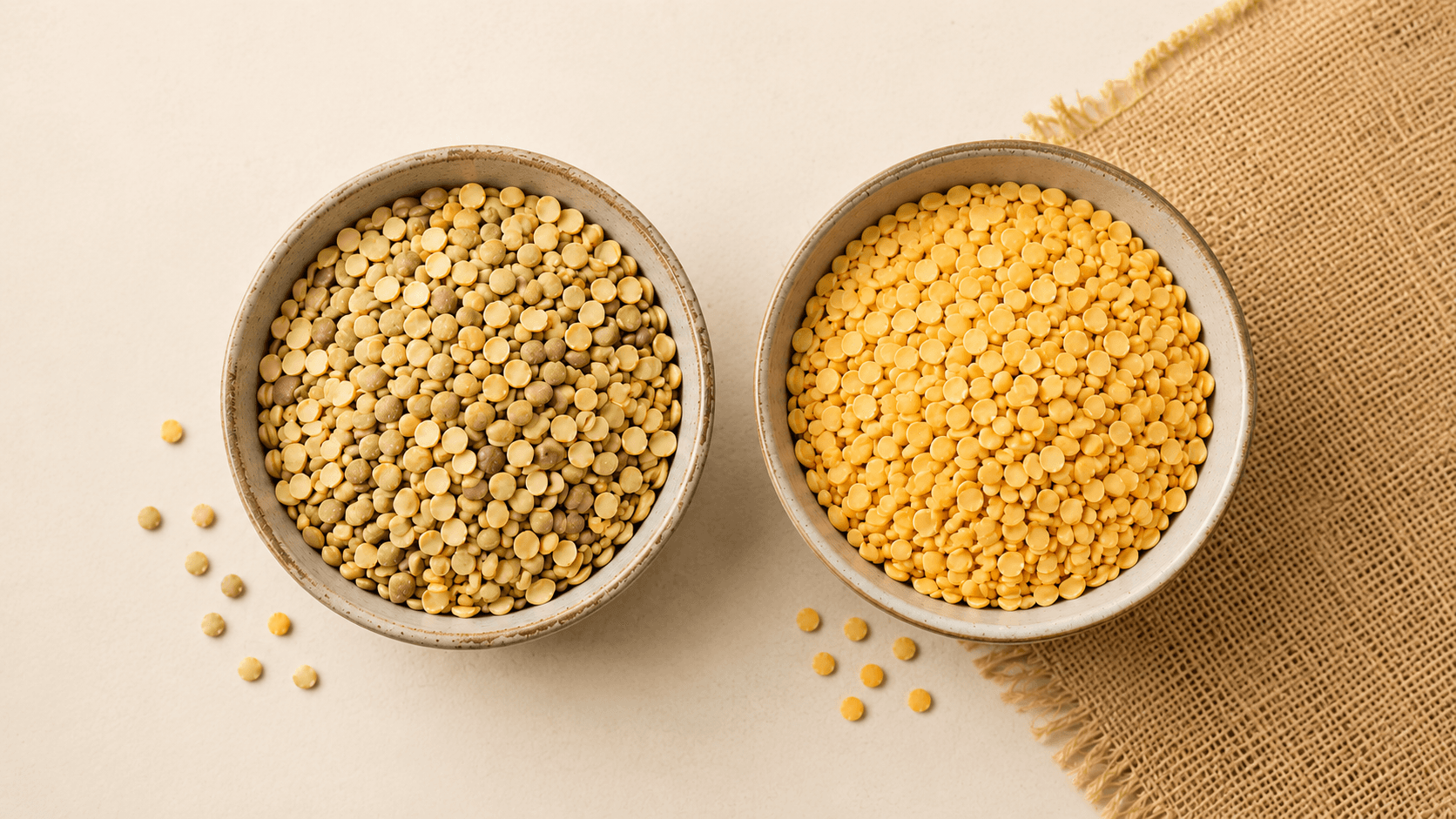
Walk down the grocery aisle, and your eyes are naturally drawn to them: bags of lentils (dals) that look practically radiant. They are uniform, perfectly smooth, and catch the supermarket lighting like tiny, edible gemstones.
But in the world of nutrition, all that glitters is definitely not gold.
That glossy sheen isn't a sign of premium quality; it's the result of an intensive, multi-step industrial polishing process. Here is a look at what actually happens to commercial dals before they reach your plate, and why choosing unpolished options is better for your health.
The Hidden Cost of the "Perfect" Dal
To make dals look attractive and extend their shelf life for mass distribution, commercial manufacturers put them through rigorous mechanical polishing. This process isn't just a simple rinse, it fundamentally alters the food.
To get that signature shine, factories subject the lentils to a sequence of polishing agents:
Water and Oil Polishing: This gives the outer layer a sleek, moist look, but it can tra moisture unnaturally or introduce low-grade oils to the product.
Leather Buffing: Dal kernels are frequently rubbed against heavy leather rollers to friction-polish their surfaces.
Marble Powder & Soapstone: In many commercial operations, mineral powders like marble dust or talc are introduced to strip away the outer husk and fill in microscopic cracks, giving the dal a smooth, artificially reflective finish.
While it makes the packaging look great, this process strips away the dal’s outermost layer (the seed coat). This layer contains the highest concentration of dietary fiber, B-complex vitamins, magnesium, and essential minerals. When you buy polished dal, you are essentially paying for a food that has had a portion of its natural nutrition scraped away.
Unpolished vs. Polished: Quick Comparison
Feature | Polished Dal | TrulySafe Unpolished Dal |
|---|---|---|
Appearance | Glossy, perfectly uniform, shiny | Matte finish, natural color variations, slightly rustic |
Nutritional Profile | Lower in fiber; stripped of key B-vitamins | High in dietary fiber, protein, and intact micro-nutrients |
Processing Agents | Oil, water, leather rollers, marble/talc powder | None. Left exactly as harvested |
Taste & Texture | Takes longer to absorb water; milder flavor | Absorbs flavors easily; rich, authentic taste |
Why TrulySafe's Natural Texture is Superior
When you look at a bag of TrulySafe Unpolished Dal, you will notice it doesn't look like a shiny prop. It has a matte finish, slight color variations, and a natural, rugged texture. That is exactly how real food is supposed to look.
Nature doesn’t do factory-precision. The slight irregularities in unpolished dal are proof that the nutrient-dense outer layer is still fully intact.
By skipping the chemical and mechanical polish, TrulySafe delivers lentils that retain their true culinary and health benefits:
Intact Protein and Dietary Fiber
Because the outer layer is preserved, unpolished dal delivers the full, intended amount of plant-based protein and dietary fiber. This means better digestion, a lower glycemic impact, and a longer feeling of fullness after your meal.Quicker Cooking & Better Flavor
Absorption Polished lentils are often coated in oils or powders that act as a barrier to water. Unpolished dal is highly porous. It soaks up water more efficiently and absorbs spices, herbs, and aromatics
deeply while cooking, resulting in a much richer, traditional flavor.Zero Chemical Residue
With unpolished dal, you don't have to worry about thoroughly washing away trace amounts of marble powder, processing oils, or talc. It’s just pure, clean, wholesome food straight from the source.
Why TrulySafe's Natural Texture is Superior
The Takeaway
We’ve been conditioned to think that clean and shiny equals healthy, but when it comes to whole foods, minimal intervention is always best. The next time you shop, look past the artificial gleam of polished lentils. Choose the matte texture, the natural variance, and the genuine nutrition of unpolished dal. Your body, and your cooking, will thank you for it.